

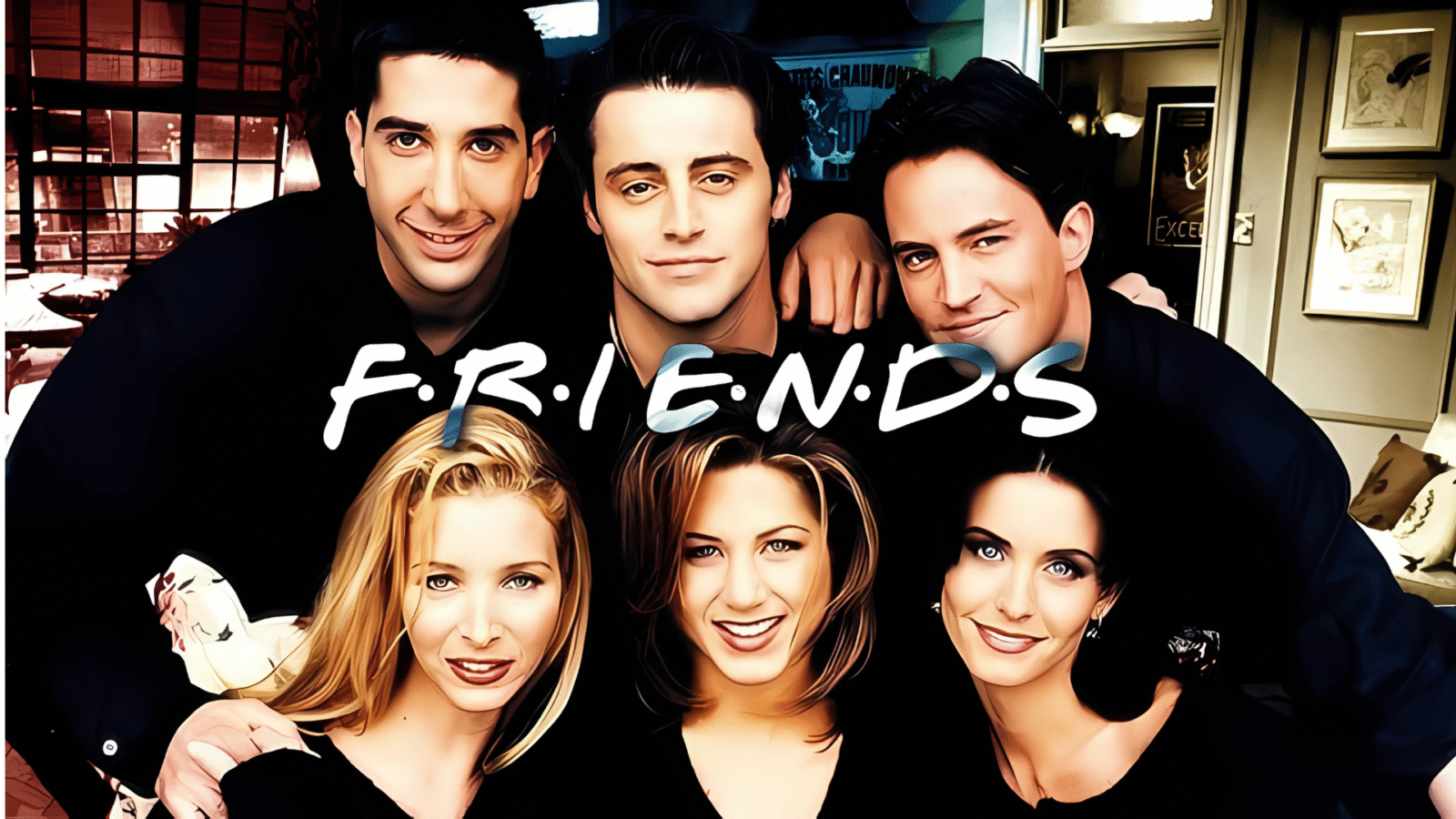
Let me take you, my friend, to September 22nd, 1994. NBC aired the pilot of the series: Friends. We see 5 friends in their twenties sitting in a café. -“What are they doing, Abo Hmeed?” -Chatting. -“And?” -That’s it, just chatting. 3 minutes go by, and we still don’t know their names. Then the scene is interrupted by a woman in a wedding dress, a run-away bride. She calls out to someone named Monica, one of the five. Turns out she’s Monica’s friend from high school and she asks to stay at her place… temporarily. It happens.
You know how a couple of days end up being 10 seasons? Rachel wanted to get away from her family for a fresh start. She wanted to rely on herself and on the group who would become her best friends. After the first episode aired, ‘The New York Times’ gave a lukewarm review. They didn’t really like it. They said it’s not impressive but kinda funny, occasionally.
What’s interesting about the review is that it asked an important question: Would you hang with them? To put it differently, is this group appealing? Would you feel drawn to them and look forward to more episodes? They predicted that the biggest challenge this show would face is demographics. Demographics is the study of human populations. Basically, the show is about 6 white young adults living in Manhattan, New York.
Naturally, this demographic doesn’t represent all Americans. There are many different classes, races, and ethnicities. They weren’t sure it would be for everyone, not all Americans would relate to it. Latinos, undocumented immigrants, Mexico filters, Canadians who don’t know there’s a more valuable dollar, Asians and Indians working in universities, Arabs with food trucks with identity crises…
That’s a lot of ethnic groups! That wasn’t achieved in Friends. But the strange thing is if we fast-forward 10 years, to May 6, 2004, we find that reality is totally different. Not only did the show succeed in the U.S., it was a global success. If there is life on Saturn, they’d probably watch Friends, too. On that day, the last episode, episode 236, aired. Let’s look at the numbers, my friend: The show aired in over 200 countries, 220 to be exact speaking around 40 different languages, with weekly viewership up to 25 million. The last episode alone had 52 million viewers.
Keep in mind, my friend, this was before YouTube, Netflix, and IPTV. Back then, if you miss the episode, you missed it for good. But the success of Friends didn’t just cross borders, it surpassed time. The last episode aired in 2004. Most filmmakers say TV shows don’t have memory, they don’t last long. Especially back in the day when they were tied to fixed airing schedules.
Unlike cinemas. Movies historically outlive series. But Friends broke those rules. 11 years after the finale, in 2015, Netflix re-aired the show, offering it to a completely new audience: millennials and Gen Z. Many of them were kids when the show first aired or weren’t even born yet. But when it was available on Netflix, viewership skyrocketed again.
So much so that Netflix paid $100 million just to keep streaming a show that had ended more than a decade earlier. They did that in 2018 to continue airing Friends in over 192 countries. In 2018, Friends made a comeback and broke records. 24 years after it first aired, it still had the highest ratings. Viewers spent up to 54 million hours watching Friends.
Can you believe that? With all the competition it had?! An old 90s show beat even Netflix’s own original productions that cost around $7 billion. In 2018, Friends was the #1 show in the UK. Take a look at the chart of shows Friends outperformed: And according to a 2022 poll, Americans voted for Friends as the greatest of all time. outranking The Simpsons and Game of Thrones. Even now, when things get tough, I watch ‘The one where everybody knows’.
“My friend and my sister!” “You’re so into listing all the numbers, but I know you’re dying for me to ask ‘What’s the secret?’ So out of sympathy, I’ll ask. Why did this happen? Why did Friends gain such wild, global, timeless popularity? Why does a show that’s older than both of us, 31 years old, still feel relevant and is still being watched by all generations?” Thanks for asking. I was really about to get into that. I’ll be back.
The Creators’ Vision: Crafting a Show for a Generation
It starts with the friendship of David Crane and Marta Kauffman, the names you see at the beginning of the show. You could consider them the real “friends” behind the story. They were writers, directors. The secret to their genius? Collaboration and chemistry. David was a genius in writing scripts and punchlines, a wizard in the writers’ room. Kauffman was a genius on set that means she focused on filming, worked in the location.
Marta Kauffman focused on the emotional side and discussed with the actors: “This line is funny, but this character can’t say that.” Over time, they gained each other’s trust. They realized that their skills complemented each other perfectly. In 1993, after several failed attempts, they sat in their offices at Warner Bros thinking of a new idea for a sitcom.
A sitcom is a series that usually takes place in as few locations as possible, with the same crew. The plot depends more on the characters than the story itself. Each episode introduces a plot that isn’t necessarily related to the previous one. So naturally, over the seasons, the flow of events slows down, and so does the character development. In the 90s, sitcoms were the trend. David and Marta didn’t know exactly what they wanted, but they were very clear on what they didn’t want.
“We know exactly what we don’t want to do. No superstars with giant salaries, because then they’d be the focus of the whole project.” We don’t want a sitcom starring a family either because it was getting boring. At the time, there was Fresh Prince and Full House. It was indeed, a full house. The audiences have had enough.
After racking their brains, they remembered their own twenties, back when they were young adults in New York before moving to LA and breaking into the film industry. At the time, they were still figuring things out. The future was blurry, life was full of infinite possibilities relationships, jobs, opportunities… anything could happen to someone in their twenties who still doesn’t know what lies ahead. From that came the idea of a show about people in their twenties. The struggle phase, the phase of infinite possibilities, when they leave their families and face the world on their own with their friends by their side.” In that time, friends become a replacement for family.
Unlike your biological family who raised you, these friends are the family you choose entirely on your own. That idea also allowed them to apply the rule of “no superstars.” The story isn’t about a lead character, but the friends themselves. The orchestra is the maestro. One day, Marta saw this weird coffee shop in LA. What caught her eye was that the place felt like a confused AI prompt.
The decor didn’t match, the furniture was weird, Something felt odd. Inside were young people hanging out. That sparked an idea. This was what inspired Central Perk, the café that got mimicked all over the world. There’s even one in Egypt. Central Perk was the beginning.
According to a 2019 study titled ‘Millennials watching Friends’, the show’s central concept is what made it timeless because every generation goes through that same stage in their twenties, the phase David and Marta describe as: Your friends are your family. Here, it’s the years you spend hanging out with your friends after graduating.
The time you’re meant to become independent from your family but you’re still unsure of anything in your life. Your job? Your partner? Everything around you is a question mark. Nothing is guaranteed. Who help you turn those question marks into stepping stones are your friends. “Frankly, Abo Hmeed, even with all the effort you put in, I don’t really relate to those young folks. First off, they’ve got full heads of hair and go on dates.
Second, you’re telling me question marks hit in their early twenties? I’m pushing 45, still full of question marks… plus aging marks. I don’t feel like I’m like them at all. I can’t just move out from my parents’ house and live with my friends. In Friends, they almost all lived together. Had they been in Egypt, they would’ve shut down the show by episode 2.
This can’t be.” That’s the secret formula, my friend. Ironically, that’s actually the reason behind the show’s global success. It had some relatable elements. But it also had things that were new and unfamiliar, making it a fresh experience. Especially that most young people wish they could live in New York and go on dates every episode. That’s what the show was made for.
It’s about friends you could join; a group of 6 friends inviting you into their lives. “Come join us, listen to our stories and experience life in New York.” That’s the first promise the intro of the series makes, the song that tells you life might be tough but despite it all: One more time, my friend.
Securing the Vision: From Pitch to Pilot
Marta and David presented the idea, expecting it to be rejected: it had no clear premise. Just a group of friends in a coffee shop. We’ll see what happens. But to their surprise, NBC didn’t just buy the script, they immediately greenlit a pilot episode. The pilot is the first episode, filmed to test it with a live audience. That’s how American TV works. They test new shows with pilot episodes. They’d get critics and ask for their feedback.
“Shall we proceed with it?” That’s why sometimes the second episode of a show feels different, the cast might look different, as if a year had passed. All that indicated NBC was very excited. According to Warren Littlefield, former NBC president, the network felt it was time to target the youth, especially those living in cities. Millions of young adults in NYC, LA and other big cities had no show that represented them.
They wanted new faces and a new voice. They wanted fresh new faces that represent them. They were tired of the old crowd. The network wanted to reach a certain audience, a generation too old for kids’ shows, but not quite ready for family programs. Something in-between. David and Marta didn’t expect their idea to be the missing puzzle piece.
Even though their idea wasn’t quite clear, but they fought hard so no one can tweak anything. NBC said that the show needed a wise, older character to guide the youth. Someone they’d go to for advice. They could chase their tails for 18 minutes and that wise old owl cracks the code in the last minute.
“We need a reference, a wise man. Call Morgan Freeman!” They thought that character could be the café owner or manager. Imagine Gunther as the wise man in the show. But as you know, David and Marta refused. Because the core of Friends is that these young adults are navigating life without the older generation’s influence.
NBC also wanted to set the main location in a diner to match the formula of the most popular show then, Seinfeld. But Marta insisted on the coffee shop, specifically the one she saw in LA. Keep in mind that the setup we’re talking about was brand new back then. Starbucks hadn’t taken over yet. Marta believed it would work and give the show a unique feel.
The only thing they agreed to change, lucky us, was the name. NBC suggested Friends. The creators originally wanted to call it Insomnia Café. Let’s call a spade a spade, it was a bad name. But what truly made the show succeed, if not the most important, was the casting. That once-in-a-lifetime ensemble cast.
The Perfect Ensemble: How Casting Magic Created Lifelong Friends
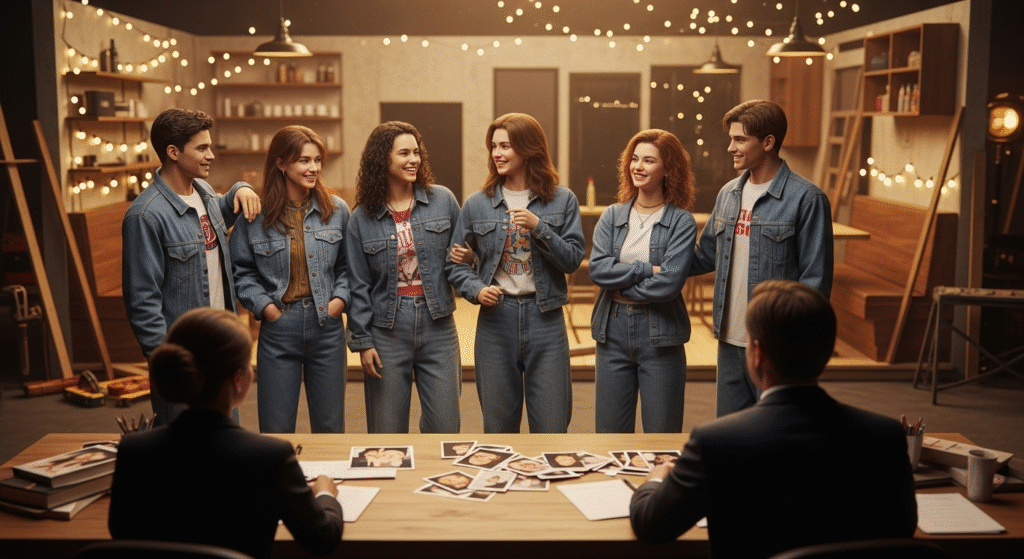
According to David Schwimmer who played Ross: Just like El-Daheeh. The casting is brilliant. [The producers, writers and editors]: “Very well.” Writer Alexander Marain said, “the genius of Friends is that each character was unique.” Who doesn’t have a friend who flirts constantly? Who turns everything into a pick-up line? Whenever he sees a girl he goes like “How you doin’?” That’s Joey Tribbiani.
Or the friend who turns everything into a joke, and hides their insecurities with jokes? I alone have 6 of those. In Friends, that’s Chandler Bing. Or the hopeless romantic who wants to fall in love and get married? That’s Ross. He went from wanting his wife to love him to wishing she loves men. “It’s ok, Abo Hmeed. Women don’t really love men.” Oh, sweet innocent viewer! And who doesn’t have that one friend who’s bossy, a control freak, the hostess of every hangout? That’s Monica Geller. Then there’s the star, the friend who’s all about the looks.
The queen of fashion, Rachel. And finally, the eccentric one, the one who has learned and lived on the streets. Phoebe Buffay. When you see these characters, you’ll get attached to them. You’ll start saying, “Hey, they’re just like my friends. That’s us.” These characters are much more complex than that intro.
David and Marta may have written the blueprints for these characters but the soul of each one was brought to life by the actors themselves. It was inspired from their true selves and real-life experiences. Let’s dive into the cast, my friend. Who are these actors? Let’s put on the director’s glasses and do some casting work. Forget who you were. Now, you’re Richard Curtis. The writers thought Chandler’s character would be the easiest to cast.
A man whose sense of humor depends on observation. He’s a clown waiting for someone to mess up so he can throw a punchline. Sounds easy, right? But for weeks they couldn’t find a single suitable actor. Most of who auditioned weren’t right for the part. After auditioning, they all called the same person. Guess who, Abo Hmeed? Matthew Perry. May he rest in peace. Actors told him, “This role was written for you.”
And he knew it. He trained other actors to audition for the part, among whom was Craig Bierko, who had got the part. He was officially cast to play Chandler. But luckily for us, he turned it down for a role he thought would make him famous. He did become famous…as the guy who turned down Chandler Bing.
That other role got him nowhere. Craig had actually copied Matthew Perry’s performance when auditioning because Matthew had helped him rehearse. “So why didn’t Matthew Perry audition himself?” He was broke and had taken a role in a show set in the future called LAX-2194. Nobody knows if it even aired. It was a flop and everyone knew it’d get cancelled.
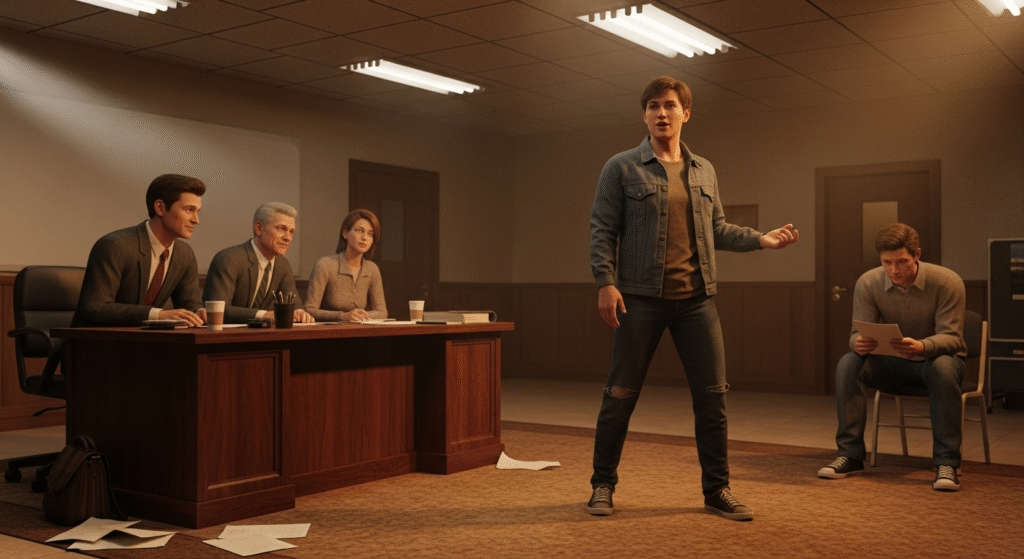
It was really difficult to get a part at a new show and do a pilot, when you’re already playing a part in another show. That’s what they call second position. It’s that way so that audiences don’t get confused and it complicates production schedules since most shows film an episode a week. Availability is crucial. But David and Marta saw Matthew’s audition and were blown away.
They believed that he was worth the risk. Mathew changed Chandler from just a guy with funny jokes to the character we all know, with its depth, background story and traits. In real life, Matthew Perry was Chandler. His parents divorced when he was young and he always felt lonely, trying to be liked.
Mathew flew alone as a 5-year-old from his mom’s in Montreal to LA to visit his dad. His airline seat had a label that summarized his life: “Unaccompanied Minor.” A lonely child. And over time, that kid became a people-pleaser, hiding his fears and loneliness behind jokes and puns. What’s even worse than a sad kid is the one who smiles all the time, a child who decided to be the entertainer, a people pleaser. He’s not doing it out of joy, but rather out of a deep desire to be wanted.
He was hiding his fear of abandonment and loneliness behind his jokes. He’s not just isolated, he’s trying to belong. Mathew believed that if he wasn’t funny, his parents and friends would abandon him. When Mathew met with David and Marta, it was him who talked about how the character would pan out. “I know that guy very well. I see him in the mirror every day.”
“I’m not great with women, I’m scared of getting into relationships because I have fear of commitment. I’m terrified of silence, which is why I always crack a joke, always trying to break the ice. But actually, I do that because I’m trying to hide behind the joke, hide from anxiety, the fear that I won’t be loved or that they’ll all leave me.” That, my friend, is Chandler in every scene, Chandler Muriel Bing, the guy who works in statistical analysis and data reconfiguration. even his friends didn’t know that. Mathew planted a part of his soul to this character and turned it into a legend.
Since we talked about Chandler, we have to talk about Joey. The Chick and Duck. Marta and David summarized Joey as follows: Handsome, arrogant, full of himself, crazy about women. Years before the first episode aired, Matt LeBlanc arrived in New York and went to a photographer to get some shots done, trying out modeling. Once I’m done simplifying scientific concepts, I’ll get into modeling, too.
“Surely you mean statistical modeling, no?” Don’t you think I have what it takes? I just need to go to Turkey and get my hair done. That’s all it’ll take. After that, girls will go crazy over me. Matt talked about it and said he was dumb back then. The photographer scammed him and took $500 for nothing.
Didn’t even tell him the most basic thing about modeling: a model needs to be tall. No such thing as a 177 cm tall model. What happened to Matt was, as he described, “a very Joey moment”. He met a pretty girl. All he really wanted was a fling. She was on her way to audition for a commercial and ended up introducing him to her manager. That’s when Matt started a successful career in advertising, doing commercials for big companies like Coca-Cola and Heinz.
Before the Friends audition, one of his friends told him: “If you want to prepare for the role, live a Friends-like day in New York, just drink and party, show them the wild side.” So instead of memorizing lines, Matt went out, drank and partied like crazy. Joey took over. On the day of the audition, Matt came in with a hangover, slipped and fell. He went to the audition looking half-drunk with a broken nose.
That chaotic mess matched the exact vision they had for Joey. They saw Joey standing right in front of them. He, too, was handsome and stupid. That’s why he got the part. LeBlanc is a smart actor. He knew people would get annoyed with Joey quite easily because he flirts with every girl in every episode. So he talked to David and Marta. He told them he wanted Joey to evolve.
He suggested making Joey the “brother-type.” Yeah, he’s a womanizer, but he’d see Rachel, Phoebe and Monica as sisters. He’d be very protective and loyal to them, treating them like his real sisters. That’s what helped Joey stay a ladies’ man while also having the innocence of a child so the audience wouldn’t hate him. Then he added Joey’s love for food, and that intensified his indulgent nature, but he still had that cute side.
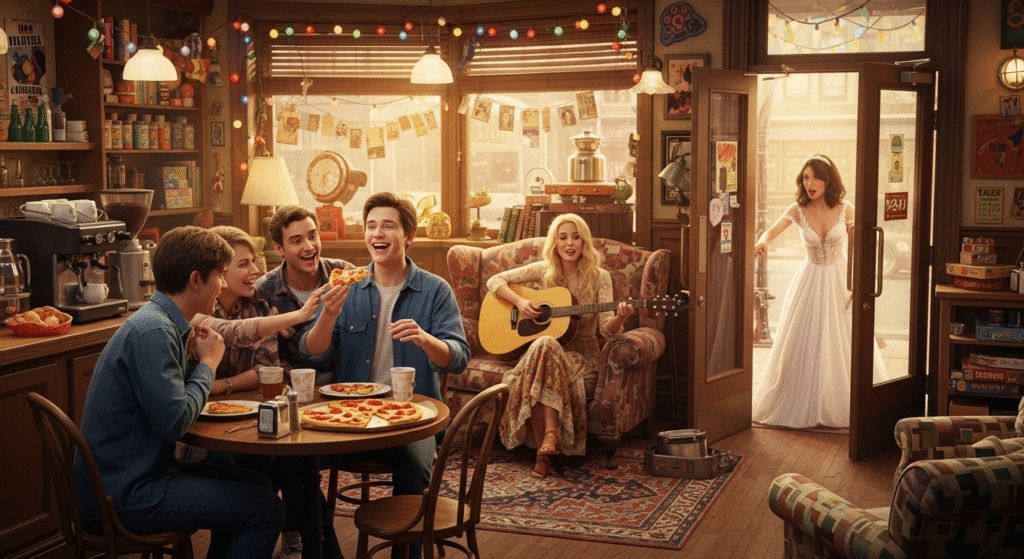
Joey’s genuine friendship with the girls made it hard for the viewer to label him as just a shallow, lustful guy. He wasn’t empty on the inside; he had depth. Even though Joey was silly, simple, and he never committed to any relationship, he was actually the matchmaker of the whole group. He officiated Monica and Chandler’s wedding, he also saved Phoebe and Mike’s wedding day.
Even when it didn’t work out with him and Rachel, she asked him, “Why didn’t we work out like Monica and Chandler?” he gave the perfect Joey-style answer: They fell for each other because they weren’t as close. “I don’t know, Abo Hmeed, whether that’s true or not. I’ve never had girl friends.” LeBlanc also made a suggestion that probably saved the show.
The writers originally wanted Joey and Monica to fall in love, but Matt’s suggestion changed that. It may have saved the series from a boring, cliché plot: “hot guy marries hot girl.” As for Phoebe Buffay, she was a nightmare for Marta and David at first. The first question anyone would ask watching the show: “What is she doing here?” She was so different that there was even a fan theory: that all the events of Friends were just happening inside Phoebe’s imagination, a homeless woman looking at the five friends through Central Perk’s window, imagining herself as one of them.
A wild theory, but it shows you how mysterious she was. To succeed with audiences, Phoebe had to be presented in a clever way, a seemingly silly, naïve girl living in her own world, but in reality, she had more life experience than the rest of them. Literally, she was raised on the streets. She was traumatized. Her adoptive mom committed suicide.
Her real dad abandoned her. Her twin sister was unbearable. So they needed a character who could represent stupidity, but in a smart way. Someone street-smart, with rich life experiences. That’s where Lisa Kudrow came in. Lisa was strict, smart, a total nerd. Her parents thought she’d never fall in love. Her father, Lee N. Kudrow, is a well-known researcher in migraines, that line of work is…well… a pain in the head.
After getting her biology degree, Lisa worked with her dad on a study about: Headache types. But she loved acting and was good at it. She joined an improv school called ‘The Groundlings’, where she played genius-type roles, similar to her true self. One day, her instructor, Tracy Newman, asked her to play “the dumb one.” She nailed it. She pretended to be dumb but with genius precision. That’s the profile that blew Marta and David away. They realized the weird character they had written was standing in front of them. Phoebe was born, a mix of innocence and intelligence.
Phoebe was ditzy, but in the end of each episode, she would speak her mind, fearlessly saying what none of her friends dared to. Like the most famous line in the series when she described Ross and Rachel’s relationship: “She’s his lobster.” Because lobsters only mate once and stay together for life. A weird example, but wise and deep. She reassured the audience that Ross and Rachel are meant to be, no matter how many seasons they’re apart.
And now we move from the easiest character to love to the easiest one to hate. David and Marta thought Rachel was easy to dislike from day one. A spoiled brat. A cry baby. Always complaining. But she was the catalyst, the one who enters the group and throws everything into motion. The one who introduces us to everyone. NBC already knew Jennifer Aniston.
“So pretty! I personally liked her even more in that 1080p version.” We’re talking about Jennifer before she became “Jennifer Aniston”, before the whole Brad Pitt-Angelina fiasco, the drama that no one came out of a winner. Back then, Jennifer was, as she says, a failed sitcom queen. She had done tons of sitcoms but all short-lived.
A few episodes here, half a season there. She loved the script for Friends. But the excitement didn’t last when she found out she was cast as Monica. David and Marta saw her as more suitable for Monica. Even though she needed that part and young actors usually can’t afford to be picky, Jennifer stood her ground: “I’m Rachel, not Monica.” You’d think she felt a connection to Rachel because she saw herself in her.
Or that she sees herself as beautiful and spoiled. In fact, it was the opposite. Jennifer was the exact opposite of Rachel. She came from a family of actors. But her parents got divorced when she was a kid and they were broke. Before acting, Jennifer did the one job Rachel hated most: waitressing. No American sitcom works without a waitress. It’s the most important job in sitcoms. Rachel in Friends. Penny in Big Bang Theory. 2 Broke Girls. It’s a must have. There has to be someone taking orders, messing up orders, giving out sneezers.
When she was young, Jennifer served rich, spoiled girls from the Upper East Side, a very posh neighborhood, arrogant rich, spoiled and fashion-obsessed girls who treated waitresses like dirt and blew vape smoke in their faces.
That, my friend, was exactly who Rachel was. Those were the girls Jennifer always envied. So she told David and Marta: Her tough life is what made her the only one capable of playing a spoiled girl. A sassy, snobby girl, but with a glimpse of kindness. The same kindness Jennifer always wished other girls would treat her with.
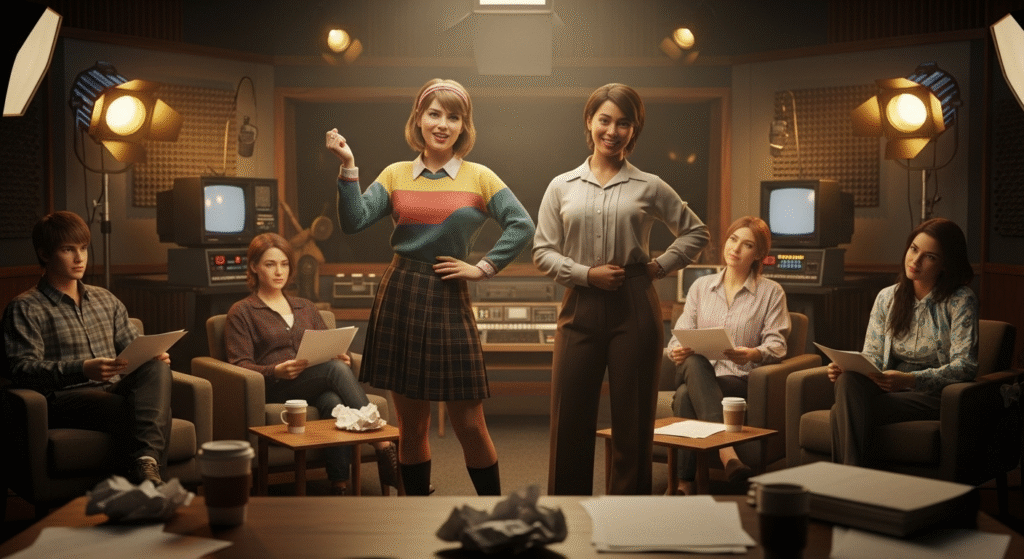
Jennifer gave a genius audition. She played the spoiled girl perfectly but she wasn’t a mean girl. She was a rich girl with a light spirit. David and Marta approved her, even though she was already working on another show. She was in a second position, like Chandler. They were waiting to see if her show would be cancelled so she could fully commit. Truth is, she was born for that role, just like Ross said.
Now unlike all the struggle stories I told you, the one who was born poor, the one who got scammed out of $500, or who were desperately trying to get roles, Courteney Cox was actually the most successful and famous actress in Friends… “In my heart too, honestly, Abo Hmeed, I love brunettes!” Focus! Before her audition, Courteney had been the lead in a movie with Jim Carrey, Ace Ventura: Pet Detective.
Courteney really liked the script. But just like Jennifer, she told them, “I don’t like the role you assigned me. I’m Monica not Rachel.” Courteney was a leader but also loving and caring. She took care of others and helped them. The Monica you saw on screen? That hostess character? All that came from Courteney.
While filming the pilot, Courteney gathered all the actors, very Monica of her. “She cooked them lasagna, Abo Hmeed?” She gathered them like a true hostess. Courteney had authority because she was the most famous of them. She told them, “If this show is going to succeed, we all need to play as a team.”
“We need to collaborate, support each other, give advice if something can make the scene better, or call it out if something is flat. One person’s success is everyone’s success.” This was a taboo in acting that Courteney broke back then. It was hard for an actor to take tips from their colleagues. But the whole crew listened to Courteney because she was the most famous and the one who was supposed to oppose this.
She said: “Apply this to me first. Correct me. Guide me.” It happened with Lisa Kudrow. Remember that iconic line of Phoebe’s? “My eyes!” when she saw Monica and Chandler together. That was actually a line Chandler used in a previous episode when he walked in on Joey in the bathroom. Matthew Perry handed the line to Lisa Kudrow and now everyone remembers it as hers, not his.
That’s the culture Courteney Cox built. And since we’re on the topic of Monica Geller, let’s talk about Ross Geller. Ross was the only character David and Marta had in mind while writing. They had seen David Schwimmer before and loved his performance. “I don’t want to talk about this actor, Abo Hmeed.” I get why that is, my friend, but he’s an important part of the series.
“And by the way, Rachel was right. He did cheat! They were not on a break!” David and Marta loved David Schwimmer, his expressions, his body language and his funny vulnerability. He was nerdy, sneaky but also sweet and kind. What they didn’t know was that David Schwimmer had had a terrible experience filming a sitcom called Monty.
He was a small-time actor surrounded by huge stars who didn’t let him contribute or even speak up with suggestions. David’s real acting roots were in Chicago theater. And in theater, teamwork is essential. After the Monty disaster, he went back to Chicago. But David and Marta convinced him, “We have what you’re looking for.”
“We both want the same thing. We don’t have big egos or superstars. We’re building a team.” David agreed, very reluctantly, to take one of the most important roles of his life. One of Ross’s best traits was his physical comedy. He made you laugh just by his posture, sad face, droopy shoulders, or that defeated “Hi…” Even without a punchline, the tone was hilarious.
Remember pivot, the couch scene? 3 friends carrying a heavy couch up the stairs. Ross convinced them he can get it up despite the stairs’ curves. Actor Kit Harington, Jon Snow, once said that this was genius. The whole thing had almost no dialogue, just one word, PIVOT. It was hilarious. Pure physical comedy, that was it. Like Mr. Bean, the joke isn’t in the script.
When the cast finally came together and started reading scenes, Schwimmer said: “It felt like 6 puzzle pieces clicking perfectly into place.” Kevin Bright, the legendary Friends producer, said: “The number one rule we built this show on was: trust the actor.” Friends became a legend because it wasn’t just some concept, but because 6 stars were given enough space and trust to bring their characters to life.
Each of them added part of their real selves, their backgrounds, personalities and made those characters way deeper than just what was on the page. Chandler’s jokes weren’t just punchlines. They came from trauma. And with that began the journey of the greatest 6-person comedy in history.
Building the Bond: From Dysfunctional Families to a Chosen One
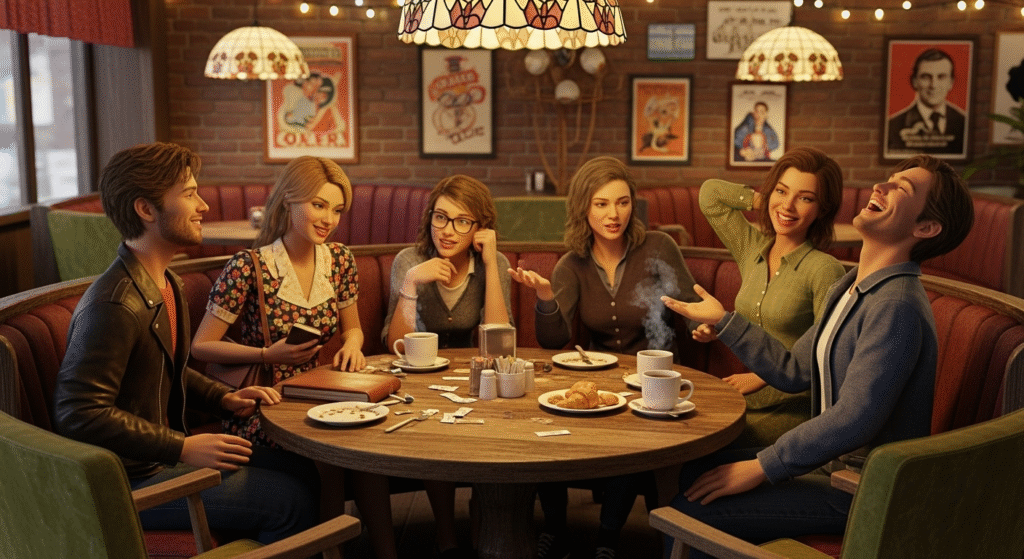
Season 1 introduced us to characters who, if asked about their life plans, they’d sum it up like Phoebe once did: “I don’t even have a pla.” A plan? Not even a “pla”. But Season 1 gave us a glimpse into each of their backgrounds. They all had family issues. Chandler? His parents divorced on Thanksgiving. His dad came out that same day. He made a decision: shift career… and gender. Phoebe? Her dad left, her mom committed suicide, and her sister was horrible. Ross? His parents loved him because he was perfect.
They loved him, maybe too much, making him feel guilty toward Monica as they constantly compared them to each other. That’s why they were very competitive. Ross believed that if he wasn’t perfect, they’d stop loving him. Monica had to control everything so that she could win her competitor, Ross, the golden boy of the family. Monica thought if she ever let go and lost control, she’d go back to who she was as a teen, the overweight Monica who poured her emotions into food.
That’s why she became a chef, a symbol of control, To become the person who prepares the food but never surrenders to it. Not like the cooks who eat while preparing food. Unlike you when you make french fries and eat them in the kitchen. Joey? His dad was cheating on his mom. Rachel? Her family pressured her so much that in the first episode, she ran away.
We could say that they were all dysfunctional families. That’s the right mix for any dramatic character in movies. Because otherwise, why would we watch a kid that was raised right? That’s one of the reasons behind El-Daheeh’s success, the messed-up childhood. [Walid Ghandour]: “Is that so? Fine. I’ll show you the messed-up adulthood.” That’s what built the bond between the Friends.
They became each other’s chosen family, the alternative family that came together on Thanksgiving. They spend Thanksgiving together instead of their families. It became a tradition. Rachel told her dad when he wanted her to come back that she was raised like a shoe but what if she wanted to be a hat or a bag or anything else? That was a funny metaphor to Friends’ core, young adults in a confusing life stage where the point isn’t to make the right choices, but just to try, until they figure out who they are.
Season 1 ended with Ross’s son being born. The group looked at him, full of love and curiosity, knowing that just like him, they too were about to be reborn. They’re not kids anymore. But they weren’t old enough either. Well, despite the puzzle pieces that had clicked together, and despite them hoping to become a huge success, united as one, the actors were terrified.
They were expecting the show to fail. Marta Kauffman said they were waiting for the show to be cancelled at any moment. They filmed each episode, wondering if it’d be their last. In March 1995, Oprah Winfrey hosted Friends, welcomed the cast and surprised them by telling them the show was a success. They appeared shocked and surprised.
“What show? What are you talking about?” Thanks to social media, we know when shows succeed because we see people posting about them. Then, programs start inviting the cast. But back in the 90’s, a show’s success was measured by appearing on talk shows. That was how they measured success back then. Oprah really surprised them.
She brought in young people from outside New York, who described the show as being just like them, saying their own friends are like the characters, even the weird Phoebe. This, my friend, was the first time the Friends cast knew they’d succeeded. Perhaps the reason season one succeeded was that it focused on the friendship exactly what writer David Crane said.
Even the love story between Rachel and Ross wasn’t given much time on purpose because the first season’s focus was friendship, a group whose charm and simplicity pulls you in. You’d want to continue the journey with them not to find out who ends up with whom, but because you enjoy their company.
Evolving and Adapting: The Secrets to Longevity
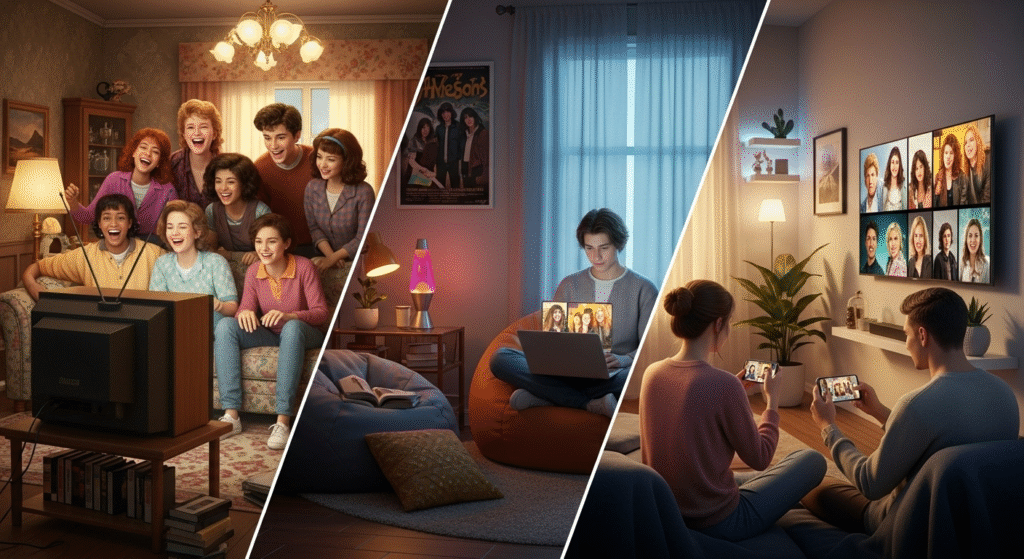
According to Critic Chuck Klosterman, Gen X, the generation Friends represented, mostly came from broken homes, with divorce rates of over 50%. A generation that had little guidance and got thrown into a tough working life. Just like Friends’ stars. In their book ‘The Fourth Turning’, Historians William Strauss and Neil Howe said that Gen X, raised in broken homes, was very hesitant when it came to starting families of their own.
This was evident in Chandler’s character, who had a fear of commitment and avoided serious relationships. Remember when he ran away from Janice to Yemen? “I’m going to Yemen!” According to the book, Gen X often looked for alternatives to marriage, usually by forming a group of close friends. This phenomenon grew even more in later generations, like millennials, who got attached to Friends.
Latest researches say that marriages in younger generations are much less, compared to previous generations. So the phase the writers chose to write about lasts longer nowadays, the phase where your friends are your family. Many people experience it. It doesn’t last for a few years like it used to. For new generations, marriage became a far-off thing.
For sociologists, this was an issue. For NBC, it was an opportunity. Imagine telling Spacetoon, “Childhood now lasts for 20 years.” That meant more views, more profits. For NBC, this meant the show would be aired for longer, and the audience would want more episodes.
This is how Friends became a candidate to run far longer than just one season because the young adults they targeted remained young. They stayed in that “friends as family” stage, their go from relationship to another, without marriage or kids. For the makers, this is the biggest challenge in shows aimed at young adults. Teen shows can’t last more than 2 or 3 seasons. Many shows blow up after many seasons.
But by season 2, Friends had already become a phenomenon, as a symbol of Gen X, representing the youth. According to a study in 2010, 11 million women in Britain copied Rachel’s hairstyle. In his book ‘Friends, Lovers, and the Big Terrible Thing’, Matthew Perry described Chandler’s way of speaking as a cultural phenomenon that still exists to this day. Friends even introduced phrases to our language that we still use. Like that one term you’ve been living in for 5 years, the friend zone.
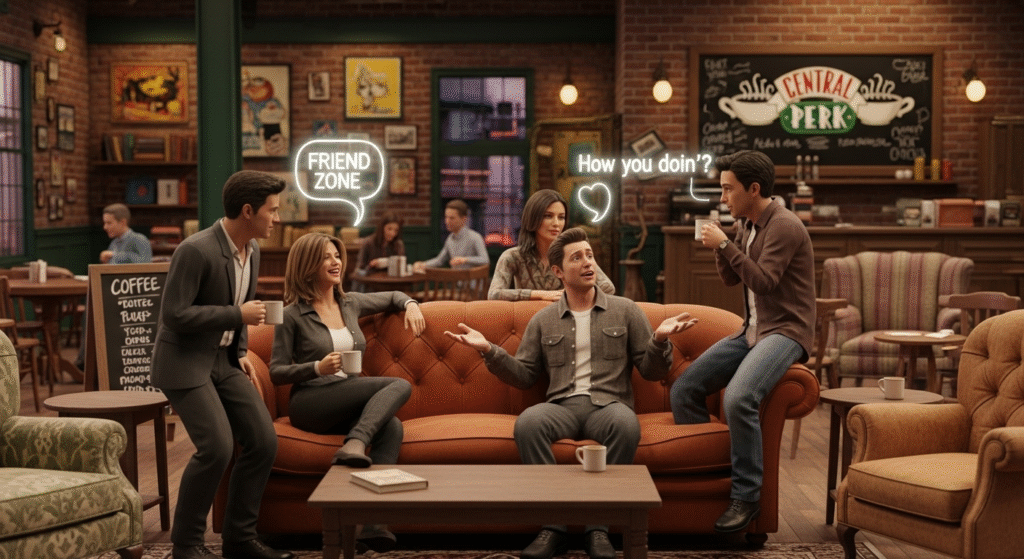
Joey came up with it while talking about Ross. Now to another episode in season 2, the prom video episode, when Rachel saw the tape of Ross getting ready to be her date to prom, only for her to break his heart without realizing he loved her. The truth was taped on video. She saw that his love was deeper than a casual crush.
“He loved me back in high school, even with that nose!” So, he wasn’t just impressed by the new Rachel. When Rachel kissed Ross in that scene, Marta Kauffman described it as an intense moment: the audience clapped endlessly. It ensured the show’s success but also warned them of a dangerous thing, something that could kill the show in its prime.
David and Marta knew that Friends wasn’t a romance; it was about 6 people, not just 2. So in later seasons, each character matured more and more. In season 3, Monica broke up with Richard, the man old enough to be her dad, the daddy-issues-relationship she used as a replacement for her unsupportive parents. Chandler broke up with Janice because she still loved her ex-husband and had a child with him. So Chandler made the right call as he didn’t want the kid to suffer like he did.
Most characters matured over time but the problem was Ross and Rachel, the biggest draw for audiences, got together and had a happy ending. So why would the audience watch again? This, my friend, is where some critics say Friends’ writers hit their stride. When it changed from a light sitcom to a rich series with deeper meaning.
Despite Ross and Rachel’s old love, up close, they were very different people. Ross, behind that romantic side lied a controlling one. He was insecure and freshly out of a relationship where his ex wife had cheated. Understandably, he was once competing against all men, then was suddenly competing with all men and women. He was unsure where the stab would come from. Anything could destroy Ross, even if it was someone stealing his sandwich.
Rachel advanced in her career, She found a great job in the fashion field. She started meeting more sophisticated men Ross grew jealous and controlling, afraid of repeating past failures. Stung by a bee, afraid of a fly. Rachel was an emotional person. Ross was controlling and practical.
Ross once made a list of Rachel’s flaws like her being spoiled and a simple waitress; and wrote on the pros side one word: Rachel. “Oh, Abo Hmeed, I wanna marry a paleontologist! I love dinosaurs.” Wait and see what happens in the following season. It might seem like a romantic gesture, but it shows his mindset. It became clearer over time. Rachel’s character changed from a spoiled girl to a woman who can depend on herself.
So Ross, selfishly, started pressuring her. He wanted her all for himself. He thought her job was just that, not a career. Differences between the characters become crystal clear: like Rachel feeling she needed space, suggested they take a break; But for Ross, despite being a romantic, he turns everything into facts and equations.
So for him, a break meant breaking up, so he slept with someone else. That’s when that iconic line became the show’s most famous excuse: We started to see new layers in the characters. Writers wanted to show life was more complicated than the simple story of “friends turning to lovers.”
It takes more than a romantic gesture or an old video to turn a friendship into a lifelong love bond. Love needs effort, responsibility and, more importantly, 7 more seasons. Don’t forget that. Across Friends’ 236 episodes, Ross and Rachel were together in about 10% only. The rest had sexual tension he loved her but she was dating, she had feelings but he was engaged.
The writers chose to make 90% of the series with them trying to keep the focus on the group evolving from childish personalities to mature ones over many years. Writers had to make a decisive choice in Ross and Rachel’s relationship. The actors also needed to make a decision that could make the series a huge success on and off camera, or destroy it and cost them everything. In season 1, each actor made $22,000 per episode.
$22,500 to be exact. By season 2, there weren’t all paid the same. LeBlanc and Lisa were the least paid actors. Schwimmer and Jennifer earned more. More jokes, less money. More kisses, well… Schwimmer’s agents pressured the producers so that he’d get paid more.
But he felt that this would be unfair to the others and it could hurt the group’s unity. They couldn’t be helping each other on camera while they were comparing their pay off camera. It would create an unhealthy environment. That’s why I’m so nice to the actors. I even have proof. See? David Schwimmer, the star who people loved the male lead of the romantic story, and the most earning actor among the group, who could’ve turned a blind eye, he was actually the one to negotiate on behalf of the others. In June 1996, he called for all 6 to negotiate together for equal pay: $100,000 per episode plus a share of syndication revenue.
“Oh my! $100,000… 22 episodes per season… a dollar is 47 pounds… That’s too much, Abo Hmeed! No one would agree to that!” You might think this was a huge number, unrealistic. But NBC made tons of money from airing the show. Ads were for $500,000 for 30 seconds. That much money for an ad break.
They all agreed: no one would negotiate alone. If the studio approached one of them, they’d tell the others. They stood their ground till they all got paid equally. This united front turned them into true friends, lifelong partners in the show’s success. They took all the decision the same way, together.
They even all put their names in for Supporting Actor/Actress Awards so none would be seen as the lead. They agreed if one would get rejected, they’d all leave. That’s what kept Friends alive. From day one, the show’s strength was the group, not an individual. David and Marta’s trust in each other was of the main reasons behind their success, along with their trust in the cast.
A series like Friends needed trust to face surprises. A long-term series written every week, no one knew what would happen. In season 4, Lisa Kudrow revealed that she was pregnant. “Guess what? I’m pregnant! Not a big deal.
In a few years, Kevin Spacey would get cancelled. But right now, Imma be a mom!” [Catering crew]: “That pregnant lady has the weirdest cravings!” David and Marta decided to go with it. It was impossible to hide it. So they worked around it and make her a gestational surrogate to her brother, like leasing her uterus to her brother and his wife. Uterus? More like a Google Drive. They uploaded a 2 KB baby then downloaded it in 3 GB. That was risky because surrogacy was a new idea for Americans at the time.
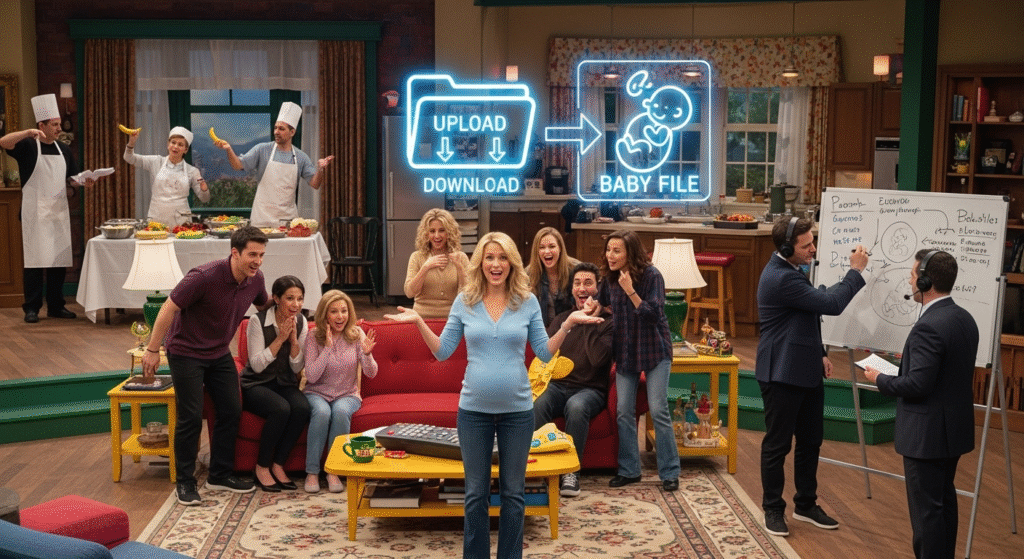
But what encouraged them to see it through was that it was a decision Phoebe would make, a bold decision made out of a pure soul that wants to help. One whose mom has abandoned refused to abandon the brother she had gotten to know. She decided to be a mom figure to his unborn children just because she saw her brother and his wife so excited about having kids. David and Marta’s brilliance in setting the tempo didn’t just depend on actors’ inputs, but the audience’s as well. Sitcoms are like plays with live audiences, you can get immediate feedback on what works and what doesn’t.
You’d know what’s good and what disappoints the audience. The audience got so attached to the characters that they understood them well which made David and Marta trust their judgement. They’d rewrite jokes until the crowd laughed, they retook the scene till the audience laughed even if it meant filming until 2 a.m., sometimes replacing tired audiences with fresh ones. That was their guidance. They’d rather get their feedback in the studio rather than publicly.
Sometimes they’d ask the crowd to raise a hand if they liked the joke so that they know how well they took it. When the 2021 reunion happened, the chosen theme was the famous trivia contest episode considered by many, including myself, one of the best.
That great episode came from on-the-spot changes based on audience reactions, with David and Marta adjusting the competition. It was a competition between Rachel and Monica against Joey and Chandler. Each team would ask questions about the other team, and the team who knew the other better would win. The writers kept rewriting the episode with the live audience until we got one of the greatest jokes in Friends, the one where nobody knew what Chandler’s job was.
Audience involvement is what would shape one of the most important relationships Monica and Chandler’s. At the end of season 4, there’s a surprise. During their trip to London, Monica and Chandler’s friendship ended forever when they got together. When they were shown together in bed, they got the longest audience cheer in Friends: 2 full minutes of joyful cheering. David and Marta tested the waters with the audience about that relationship, like in the episode “Birth”, where Chandler made his famous proposal: if he and Monica were single at the age of 40, they’d get married.
Throughout season 3, Chandler tried to convince Monica he’d be a good boyfriend, and Monica was convinced that their friendship was more important. It’s very hard in a show like Friends to suddenly have 2 characters get together except for Ross and Rachel because we knew from the start they’d end up together. The writers intended for Chandler and Monica to have a one night stand and then go back to being friends. What happened in London stays in London.
But when they saw such a strong, enthusiastic reaction from the audience, they realized that the audience were right: Monica and Chandler were perfect for each other. A man terrified of commitment, ruins his relationships before they begin as he thinks he doesn’t deserve that love, otherwise his parents would have loved him. It makes sense that he finds love in a long friendship that turned into romance.
Because he had already shown his true self and didn’t get rejected. When he felt that Monica loved him, he believed it. She was his friend. That’s why when he confessed his love, it wasn’t a big romantic moment, but a spontaneous one when she’s pulling a prank on him. Take notes: if he doesn’t confess soon, stick your head in a turkey. That works with all men.
Monica, a control freak, needed someone like her, hurt because of parental issues but these issues didn’t give her a controlling partner, but a nurturing one. Or, as Chandler put it, she’s high maintenance and he likes maintaining her. She’s someone who needs a lot of work, but he likes to do it. The audience picked up on that before the writers did. From seasons 5 to 7, Friends moved past its core, the “friends” concept.
In season 5, Chandler and Monica were a couple. In season 6, they moved in together. In season 7, they got married. Friendships shifted. Chandler no longer lived with Joey, Rachel no longer lived with Monica. In season 6, in the episode “Could have been”, the characters imagine an alternative reality. What would’ve happened if Rachel hadn’t run away, if she’d married the dentist? Every character’s path is completely different. Phoebe turned into a workaholic businesswoman. Joey would’ve been successful and Chandler, a failed writer. Monica would’ve been overweight again.
Why We Still Watch: Nostalgia for a Simpler Time
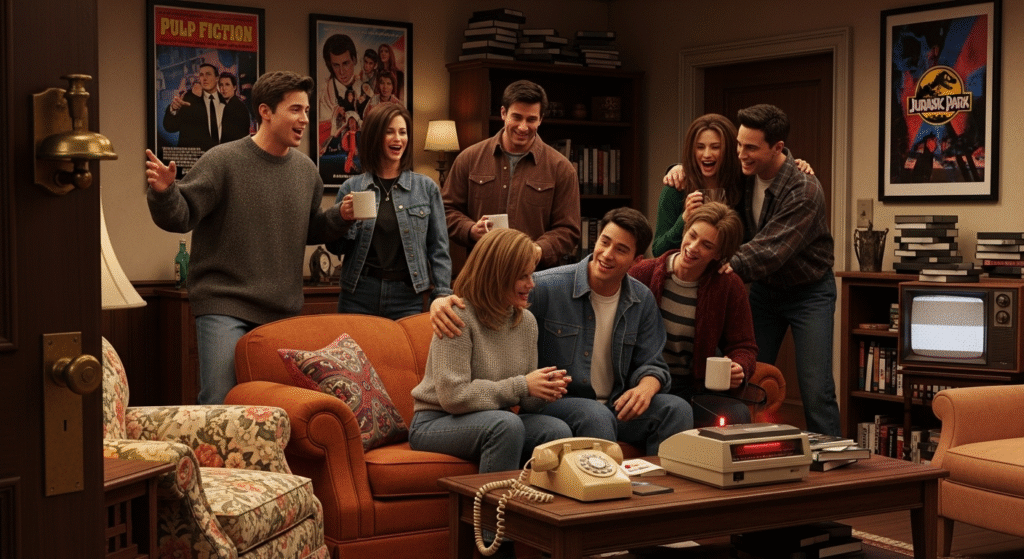
That would take us to an important reason behind the millenials’ attachment to Friends even though the series doesn’t follow its concept till the end. One of the greatest reasons Friends is still loved is nostalgia. The main reason why people love Friends is them longing for the past, the 90’s: the early days of fun technology, capitalism before it showed its ugly side, good movies, good music, Robert De Niro, Al Pacino, the greats! “Hold on! The millenials you’re desperately clinging onto, pretending you’re one, weren’t even born, or were too young to remember the 90’s.
Stop telling lies for content! You’re not a content creator, you’re a content faker!” -“You liked it?” – I did! Nice word play! That’s funny… Not! “Um… I’m sorry. Go on, Abo Hmeed. You were saying millenials loved the 90’s…” Let me tell you about a study by Ryan Lizardi titled ‘Mediated Nostalgia’. The study says it’s easier to feel nostalgic for a time you didn’t live through because you imagine it in a perfect way, an idealized past.
This feeling increases in younger generations, emerging adults who are still forming their identities. It’s easy for them to escape the ugly, confusing present and retreat to an imagined beautiful past, fueled by their parents who keep talking about the “good old days”, “everything was better back then.” You know the rest.
That’s how they all are. A bit delusional, don’t you think? Imagine if we could turn back time, to the “good old days”, we’d be shipped overseas. Millenials felt like the Friends era was simpler than ours today, without the internet, Instagram, smart phones, or social media pressure. All they had were answering machines and doorbells.
In that era, if people wanted to talk, they met and talked without phones. They had better communication. When they wanted to see each other, they’d go out. They got together to celebrate. If they set a time for 6 p.m., it meant 6 p.m. you can’t cancel last minute, that wasn’t an option. That’s what makes Friends, no matter how much its story evolved, it’s full of reasons to keep watching. At the end of season 7, Monica and Chandler get married.
30 million people tuned in. Most of the cast saw it as the perfect moment to say goodbye, a happy ending, let that be the end, a happy ending that turned a flawed relationship into a stable, mature one, one of the show’s best. But as we saw in Sherlock Holmes, Friends became bigger than its creators. It became a cultural epic shaped not just by actors and writers, but also by the audience.
A Cultural Touchstone: How Friends Healed a City
Not just that. There were greater events that shaped Friends’ journey. Here’s a fact you might not believe at first: the world before September 11 was a different place from the world after. “You don’t say! Abo Hmeed, this has nothing to do with Middle East!” I love your sarcastic tone, my friend. You’re using that tone with me? I’m to blame, I’m the one who explained to you the regional situation, but remember, I’m the one who taught you strategy.
I can replace you whenever I want! “Yes, Abo Hmeed, the world really did change.” Exactly, the world changed after the towers were hit. The question is, how would a sitcom in Manhattan about a group of friends continue after Manhattan had turned into a ground zone, the center of an unforgettable disaster? According to David Crane, Friends always avoided dealing directly with heavy events like death if they appeared, it was incidental. Like when Joanna, Rachel’s boss, dies in an accident before signing Rachel’s promotion papers.
They used this as dark humor. Rachel got promoted and we’d wonder what would happen next. So the writers surprised us with killing off the boss. It’s dark humor, but still humor. But the audience’s reaction to death was silence like a child reading a comic book when suddenly a character dies. It was as if death didn’t belong in Friends’ world.
So how could Friends handle 9/11 without ignoring it, but also without turning into a drama? They had to validate what happened but keep the comedy spirit. The writers came up with a genius solution where 9/11 happened in Friends’ world, but it was part of the show’s world only through visuals, never in dialogue. Some visual clues like putting up flags in Central Perk, supportive drawings on Chandler’s door board.
Did you notice that the drawing changed every episode? “You have an eye for detail, Abo Hmeed!” Another clue was with Joey one time when he appeared wearing the badge of Captain Billy Burke, a firefighter who died saving people in the North Tower. The message was clear to all New Yorkers: “We didn’t ignore it.”
According to sociologist Ernst Bloch, humans have a constant tendency toward hope, dreaming of a kinder world than the realistic harsh one. or as he puts it: Americans’ hope wasn’t in mirrors, but in screens, watching a series that can make them laugh in such a trying time. Lisa Kudrow, Phoebe, used to downplay acting.
She saw that it was less important than studying biology or in other words, actors won’t cure cancer. But in 2001, strangers in New York looked at her with gratitude. That feeling spread to the whole cast. They realized that acting can give people hope to push through the tough times. Marta said proudly: During the filming of episode “Creepy Holiday Card”, the audience were 9/11 survivors and victims’ families. The cast felt the importance of what they do.
They couldn’t cure cancer, but they could make people laugh when they needed it most. Friends raised the hopes of people when needed. Season 8 premiered on September 27 becoming the highest-rated not because it was the best, but because it was what people needed then. It wasn’t the best but it was the most demanded.
That’s the power of Friends, in that generation and the next, it’s what the researchers call At the difficult times in New York, Friends was a constant in a changing world, when a disaster struck killing hundreds, when people were at home, terrified, Friends came to deliver on its promise: According to a 2012 poll, Friends was one of the most effective ways to learn English worldwide.
In an interview with BBC, Jürgen Klopp said that it helped him learn English. BTS star RM said the same about Friends in South Korea. The best achievement is that the audience watches the series forever. David Crane said it’s hard to make a hopeful show like Friends, with stars in their 40s or 50s because it’s a story about the 20s and 30s, an immature generation hands over to a more mature one.
Conclusion: A Friend for Every Generation
In a time when your friends are your family and the world is full of options, fear and hope. That’s why it’s the hero of that phase in our lives. It reassures us and saves us. At some point, we’d have to bid farewell. But each new generation rediscovers it when they reach that same stage. As always, the show welcomes, reassures and plays the same role. It’s a cycle where Friends becomes the friend.
According to David Crane: The show came to an end but the story of friends remains. After all, even after growing up, you’ll find yourself going back to it. In her book, Kelsey Miller said that she got engaged at 30, and normally, friendships fade over time, everyone becomes busy with their own world and responsibilities.
She was no longer the young 20 year old who had her whole life ahead of her. The endless options are now a few. She binge-watched Friends again even when it no longer reflected her current friendships, nor was even relevant but because it expressed the nostalgia she felt to that phase. Her words summarize how we feel about Friends, So, my friend, there’s no doubt that Friends is legendary.
No matter your age, or the hard times you’re going through, if you’re watching, you’re in good company. You’ll find 6 people who can be your friends no matter where you are, how old you are or the burden you carry. They’ll promise you so honestly, “I will be there for you”